Why institutions are replacing disconnected tools with one campus platform
Spreadsheets, standalone apps and manual handoffs create duplicate records and slow decisions. Here is what changes when campus operations share one platform.
Few campuses set out to run on a patchwork of tools. It happens gradually: a fee spreadsheet here, an admissions form builder there, an attendance app adopted by one department and a library system bought years ago. Each tool solved a real problem at the time. Together, they have created a new one.
When information lives in separate systems, staff spend their time moving data rather than using it. Leaders wait for reports that are already out of date when they arrive. Students and parents get different answers depending on which office they ask.
The hidden cost of disconnected systems
The visible costs of running many tools are licences and maintenance. The larger costs are harder to see because they are spread across every office:
- Duplicate data entry, as the same student details are typed into admissions, fees, examination and transport records
- Conflicting records, where a phone number or fee concession is updated in one place but not another
- Manual reconciliation at month-end and term-end, usually through exported spreadsheets
- Inconsistent access control, with each tool managing its own users and permissions
- Slow answers to simple questions, because no single system holds the full picture
None of these appear as a line item in the budget, yet together they absorb staff time and create avoidable risk, particularly where sensitive student and financial data is copied between systems.
What a single platform changes
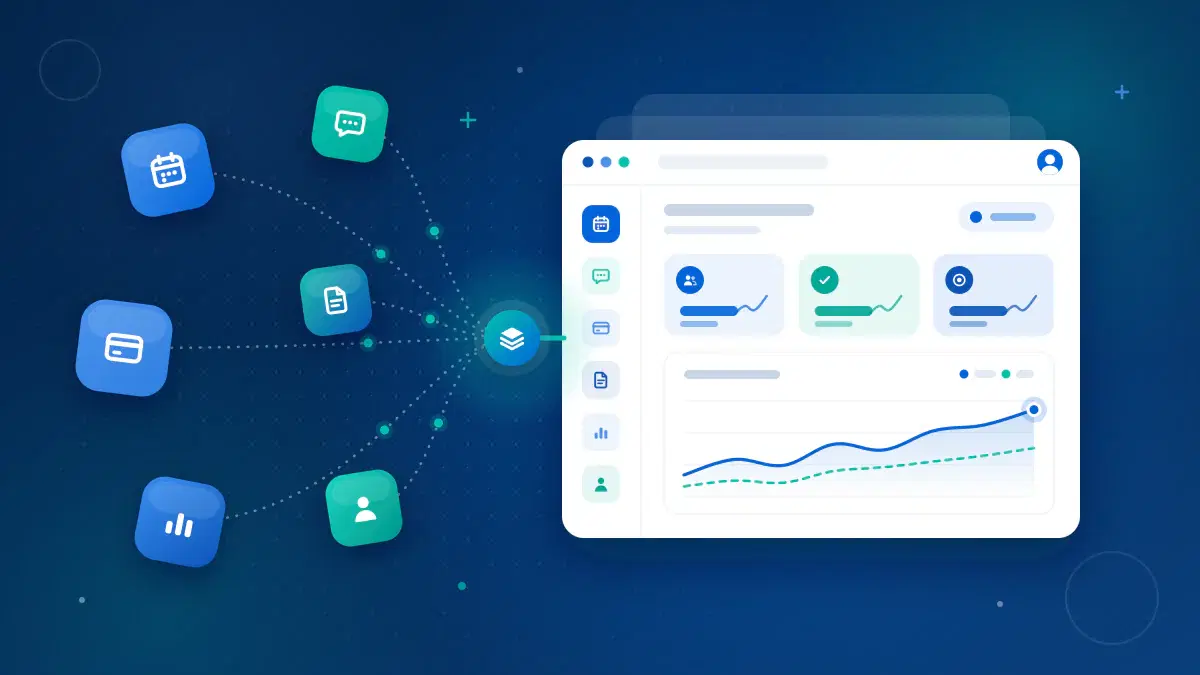
A connected campus platform starts from one principle: each fact is recorded once and reused wherever it is needed. A student admitted through the admissions workflow becomes a student record, which then drives class allocation, timetables, attendance, fee billing and examinations without being re-entered.
This has practical effects. A fee concession approved by the finance office is visible to the accounts team straight away. A change in a student's section is reflected in attendance registers and timetables. Leadership dashboards draw on live operational data rather than on reports compiled by hand.
The real value of one platform is not fewer logins. It is one version of the truth that every office can rely on.
Questions to ask before you consolidate
Moving to one platform is a significant decision. Before committing, it helps to ask whether the platform can model your actual structure, including multiple campuses, programmes and fee rules; whether permissions can be set by role and campus; whether sensitive changes are logged; and whether modules can be introduced in phases rather than all at once.
It is equally important to involve the people who will use the system daily. Office staff, faculty and accounts teams know where today's workarounds are, and those workarounds usually point to the requirements that matter most.
Where mycampace fits
mycampace brings admissions, student records, academics, examinations, attendance, finance, HR, campus operations and analytics onto one cloud-native, multi-tenant platform. Role-based access, audit logging and workflow approvals are part of the core, so institutions can consolidate without losing control over who sees and changes what.